

This week - Cuba crisis, African leaders in Ukraine, Morocco pipeline, Libya's reserves
Week of June 19th, 2023.


Cuba’s energy crisis
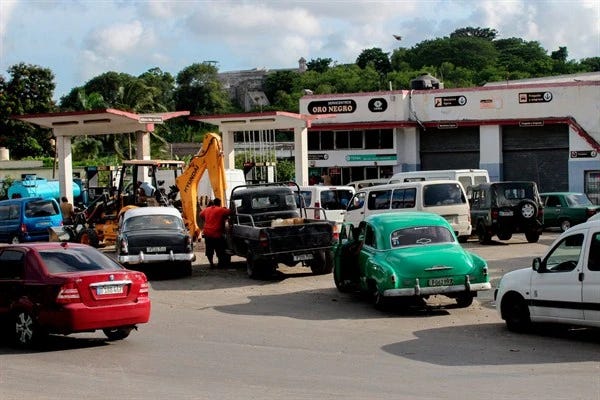
Cuban prime minister Manuel Morrero, who is visiting Russia, announced the island nation will receive 1.64 million tonnes of crude oil and derivatives from Vladimir Putin’s government. The delivery will be desperately welcome in crisis-struck Cuba, which is suffering from a three-pronged phenomenon: the fall in tourism since the pandemic, the tightening of the US blockade by the Trump administration, and the inability of its ally Venezuela to provide enough oil. Mexico is also proving to be a helpful oil provider, as shipments have been increasing this year.
Cuba’s prosperity is largely at the mercy of US presidents. President Obama’s rapprochement, easing up parts of the blockade, boosted growth. The succeeding Republican administration however hiked up measures, targeting foreign investments from third parties, US tourism, and remittances, among others. As he left office, President Trump inserted Cuba in the “state sponsors of terrorism” list, which is inflicting additional hardship on ordinary Cubans, according to the Washington think-tank WOLA.
Borrell’s visit
The EU’s top diplomat, Josep Borrell visited Cuba two weeks ago. The main topics on the agenda were European investment in the island and support to the emerging private sector. Borrell also brought up human rights and how the EU could lobby for a softening of US sanctions. This would be the first time that Havana agrees to discuss human rights in an official capacity, likely a sign of Cuba’s dire need for EU support. The EU plans to invest €94 mn euros, including €14 mn for “micro, small and medium-sized enterprises”, which make up the private sector in Cuba.
Borrell’s focus on the emerging private sector comes after President Miguel Diaz-Canel has offered a new degree of flexibility. Non-state firms can now hire up to 100 workers. These are largely a mix of family businesses, cooperatives, and self-employed contractors. The public sector still dominates the economy, accounting for 88% of GDP. While the non-state economy is gradually growing, there is still no talk of privatisation in Cuba.
African leaders propose peace plan for Ukraine War
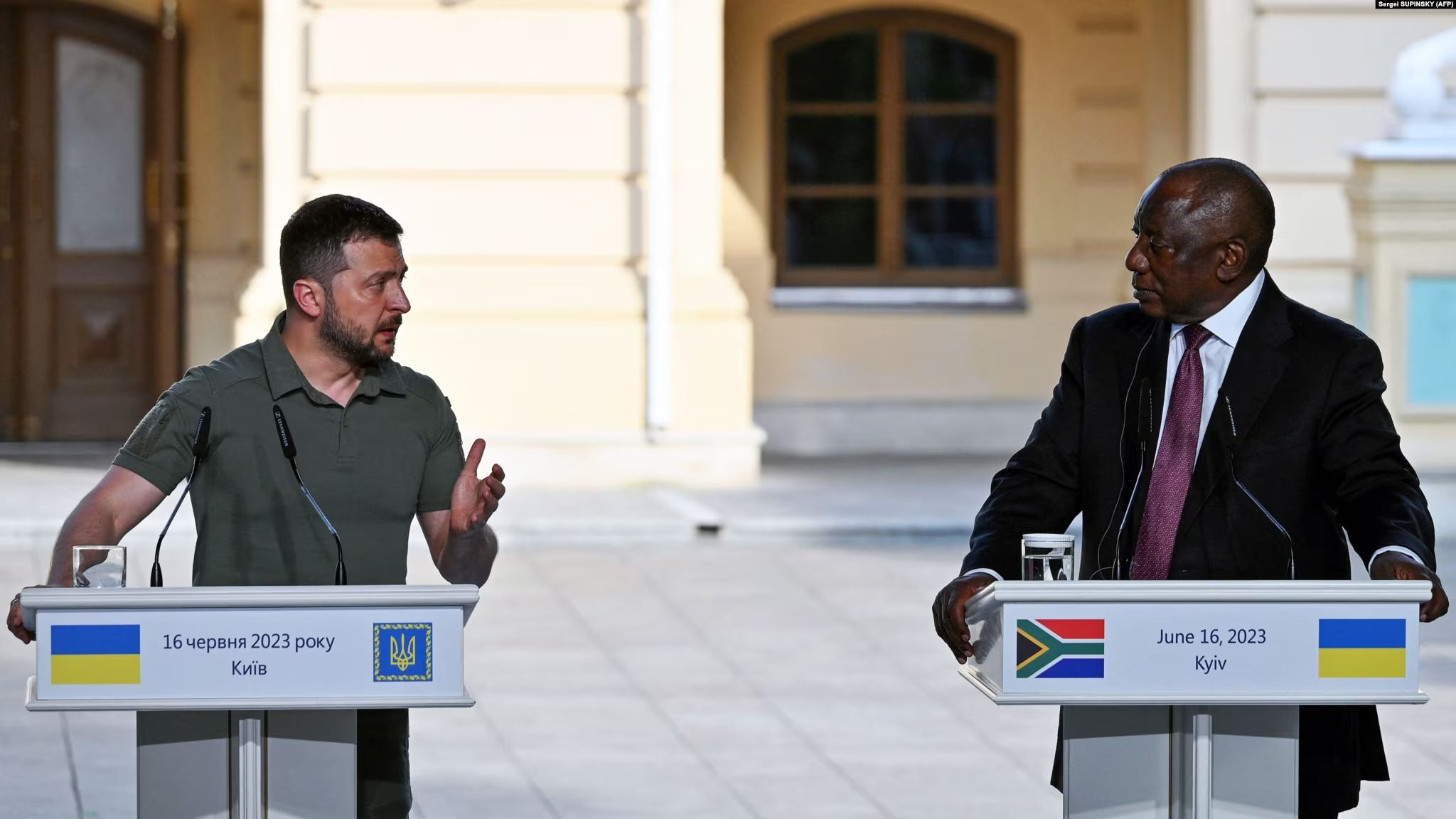
Leaders and top-ranking officials of seven African states visited Ukraine and Russia in hopes of contributing to ongoing peace efforts to end the conflict which has lasted for over a year thus far. The delegation was organised by South African President Cyril Ramaphosa and involved Comoros, Senegal, Zambia, the Republic of Congo, Egypt and Uganda. The leaders first visited Kyiv, Ukraine to meet Ukrainian president Volodymyr Zelensky on June 15 before meeting Russian President Vladimir Putin in Moscow the following day. In their visits, the African delegation stressed the need for both warring states to engage in dialogue and declared that the group was ready to act as a mediator.
Ramaphosa also submitted a 10-point initiative to reach peace. This proposal however was shut down by both Ukrainian and Russian officials who whilst recognising the plan as admirable claimed it to be unrealistic under current circumstances. Russia has declared that to hold talks with Ukraine, its newly annexed territory in Southern Ukraine and the Donbas region must be recognised. Meanwhile, Ukraine demands the withdrawal of Russian troops from occupied territories before beginning talks with Moscow. Despite this, Zelensky invited African leaders to take part in an international peace summit concerning Ukraine that is under development.
Neutral Africa
While the West was quick to support Ukraine in its efforts to defend itself from the Russian invasion, many developing countries were hesitant to pick sides, instead opting for a neutral stance. Though this visit is unlikely to yield any meaningful results, the initiative taken by these African states could represent a greater diplomatic role for developing nations across the world internationally, challenging the idea that less economically developed states particularly those in sub-Saharan Africa had no voice among the international community. As the division between East and West continue to grow, African and South American nations may play a greater role in resolving tensions through diplomatic means.
New signatories for the Morocco-Nigeria pipeline project
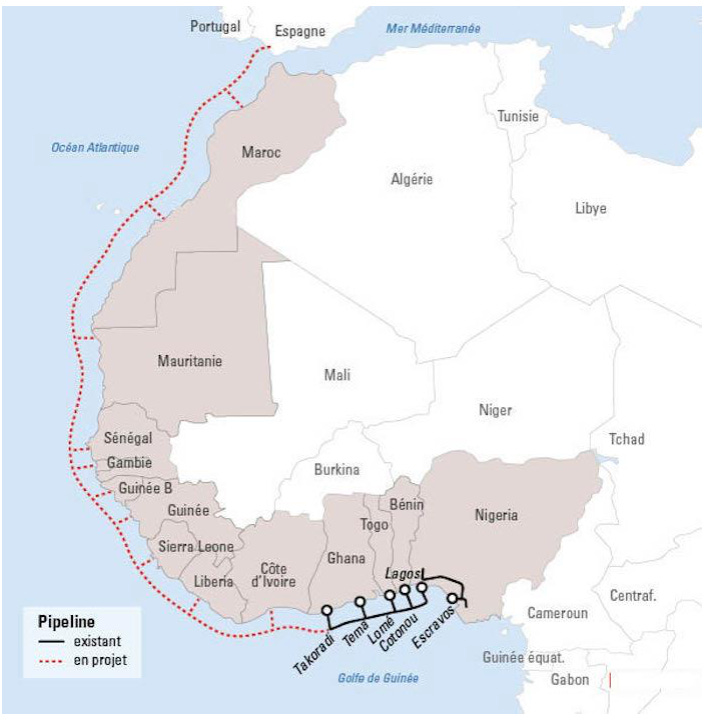
Five West African countries became signatories to take part in an ongoing project to construct a new Morocco-Nigeria gas pipeline which is estimated to be worth 30 billion dollars. Participants included the Ivory Coast, Liberia, Benin and Guinea. Mauritania, Senegal, Guinnea-Bisseau, Sierra Leone and Ghana signed the memorandum in late 2022. Speaking in November 2022 about the project, King Mohammed VI of Morocco emphasised that the project is aimed at benefitting all of West Africa by securing economic integration and advancing regional development. Under the recent memorandum, the Nigerian state oil corporation (Nigerian National Petroleum Company) would own 50% of the stake in the project by investing over 12 billion dollars.
The ambitious project would see the construction of a pipeline spanning over 5000 kilometres across West Africa. In addition to supplying West Africa with Nigerian gas, the project also hopes to supply Europe through Spain and Portugal as an alternative to Algeria which currently supplies Italy through the Trans-Mediterranean pipeline and is the main supplier of gas to the EU from Africa. The Morocco-Nigeria pipeline was first announced in 2016, though interest in the project has increased significantly following the start of the Ukraine war in 2022. The feasibility of the project is still undergoing research and review according to Nigerian Petroleum Minister Timipre Sylva.
Venezuela Election Update
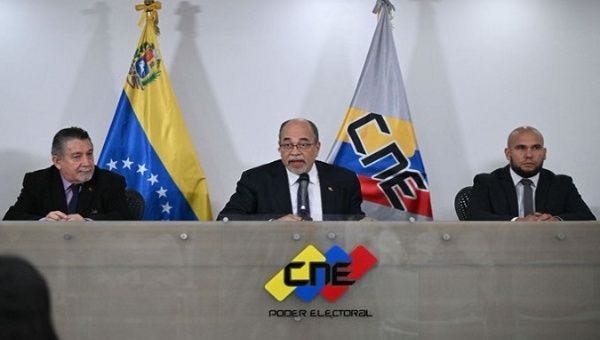
In a new development towards Venezuela’s awaited 2024 vote, the main posts from the electoral council (CNE) have resigned. The national assembly will be appointing the new board. The key issue is that a new CNE could be more in favour of Maduro. In 2020, the main opposition leaders boycotted parliamentary elections, giving the ruling PSUV party a large majority. In October this year, the CNE is expected to support the opposition for its primaries.
While the outgoing board was majority-controlled by government allies, it had shown to act fairly. In the 2021 regional and local elections, EU observers did not find issues with the CNE at the time. Rather, they found problems with other actors; claiming that PSUV candidates were given state resources for campaigns and more representation in the media.
The choices for the new board will have far-reaching implications. Hardline opposition leaders could find that it will not be fair, and therefore drop out of the 2024 race. In such a scenario, the Biden administration would sustain economic and financial sanctions. The government in Caracas may have lost hope for a rapprochement, however, and instead focus on winning next year’s election. The fact remains that Washington has hardly backed down from its “maximum pressure” strategy. Though it has made an exception for Chevron to resume operations, all other measures remain.
We will publish a more detailed report later this week on Venezuela’s sanctions.
Central Banks
Libya’s oversized reserves
The IMF is back in Libya after a decade-long civil war. The organisation has been able to publish data on the country’s central bank, which has built up exceptionally large reserves, of 210% of GDP. The fund has also highlighted a fixed exchange rate and capital controls. These measures have “played an important role in helping the country overcome the exceptional swings in oil production and revenues that occurred post-revolution”.
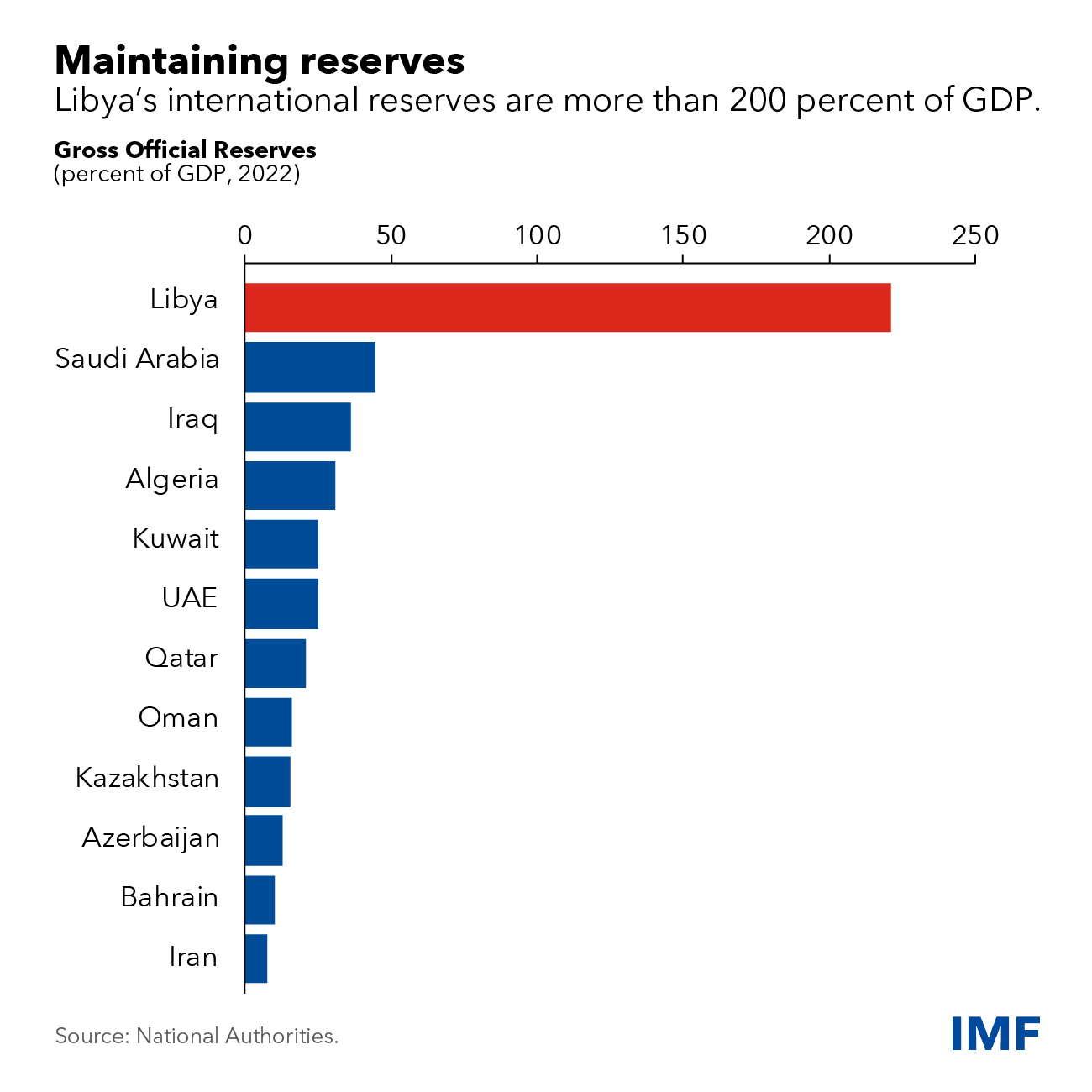
Libya has been ravaged by conflict since 2011, as uprisings broke out against the rule of Muammar Gaddafi and NATO forces intervened. In 2014, civil war broke out again between different factions, coming to a resolution only in 2021, under an agreement brokered by their foreign backers – including Russia, Turkey, the UAE, Egypt, and EU governments. Despite the war, fossil fuel production was kept up. Libya has a similar oil output to neighbouring Algeria, which has 6.6 times the population. Additionally, the war has prevented the Libyan government from making investments at home, instead buying assets overseas.
Kenya report
Central Bank of Kenya publishes its weekly bulletin for monetary and financial development revealing the following findings:
Kenyan shilling remained relatively stable for the week ending on June 15 with USD 1= KSH 139.71 compared to USD 1 = KSH 139.11 the previous week
Liquidity in the money market increased due to government payments
International oil prices declined due to a decrease in demand from USD 77.28 on the week ending on June 8 to USD 74.50 on the week ending on June 15.